
Soft Enamel vs Hard Enamel vs UV Printing: A Real Metal Fridge Magnet Comparison
What is the difference between UV printing, soft enamel and hard enamel on a custom metal product?
We recently made three versions of the same metal fridge magnet for a customer. All three versions used the same mold, the same zinc alloy base and the same overall thickness.
The only major difference was how we finished the front.
This gave us a useful way to compare the appearance, production steps, cost and lead time of each method.
Here is how we made them.
1. Starting with the Customer's Artwork

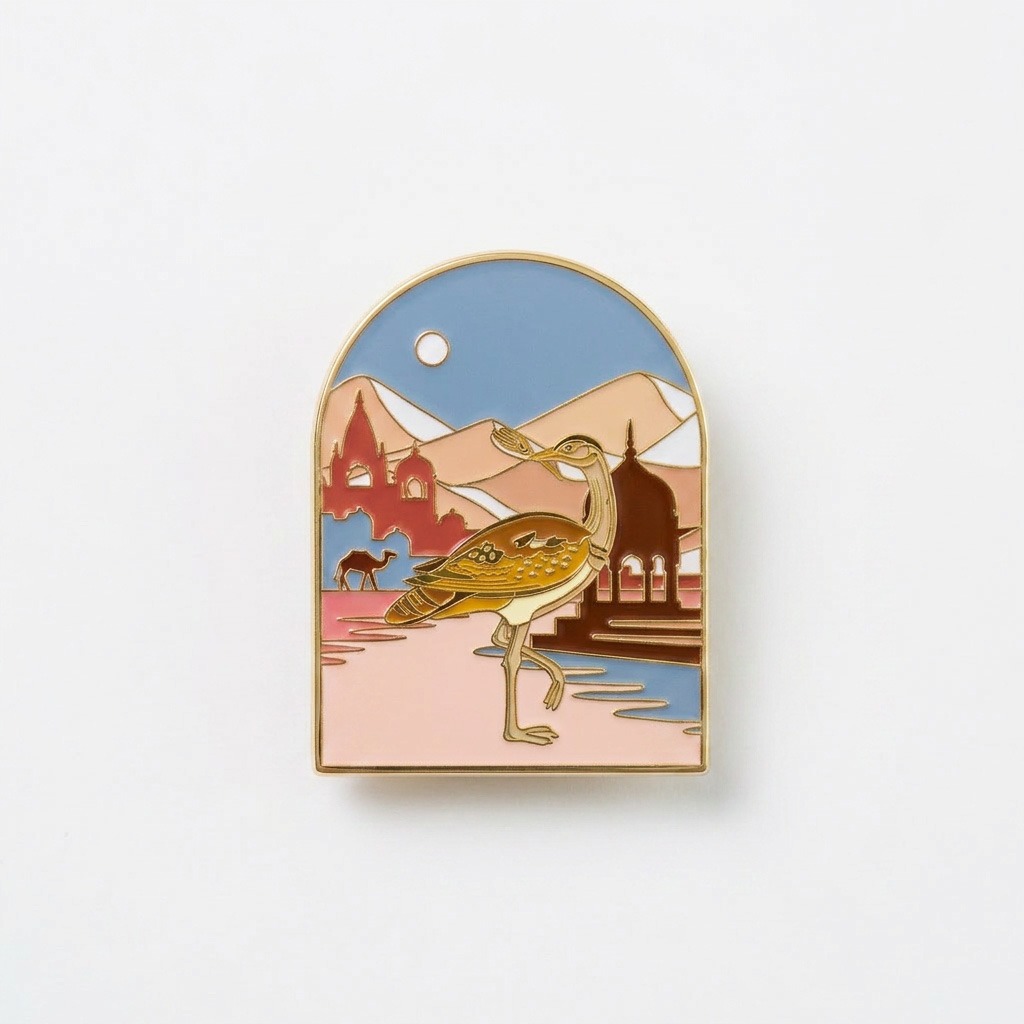
The customer first sent us an illustration showing a bird, mountains, a building and a colorful landscape.
They also provided an AI-generated image showing how the artwork might look as a finished metal magnet.
The AI image was helpful. It gave us an idea of the metal borders and the overall appearance the customer wanted.
But we couldn’t use it directly for production.
Some details in the AI image were different from the original illustration. The layout had changed, and a few extra elements had appeared.
We needed to go back to the original design and prepare a drawing that could actually be made in metal.
.
Turning the Design into a Production Drawing
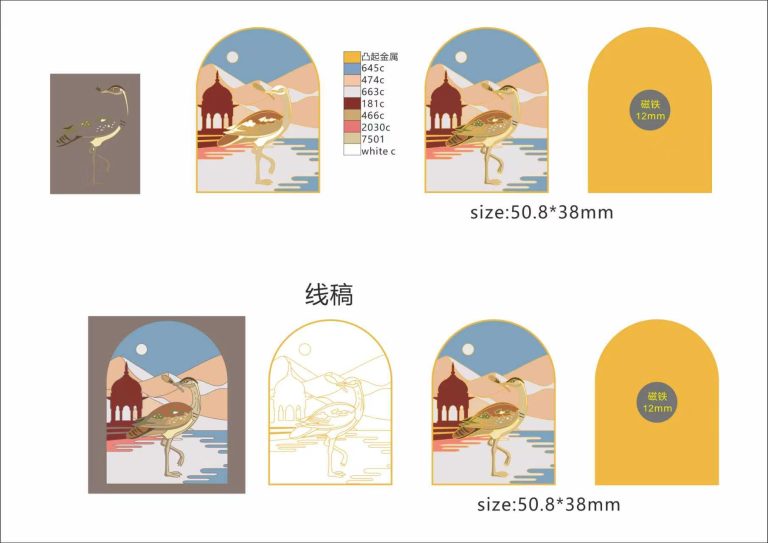
Our drawing confirmed the product’s outline, size, color areas and raised metal lines.
For this project, the specifications were:
| Item | Specification |
|---|---|
| Product | Custom metal fridge magnet |
| Material | Zinc alloy |
| Size | 50.8 × 38 mm |
| Overall thickness | 2.5 mm |
| Mold recess depth | 0.5 mm |
| Back attachment | 12 mm magnet |
| Finishing options | UV printing, soft enamel and hard enamel |
We also marked the color references and prepared a line drawing showing where the metal borders would be.
This stage is important because an illustration and a metal product are not the same thing.
In an illustration, two colors can meet without a border. With enamel filling, we usually need a metal line between separate color areas.
Very fine details also need to be checked before we start making the mold.
.
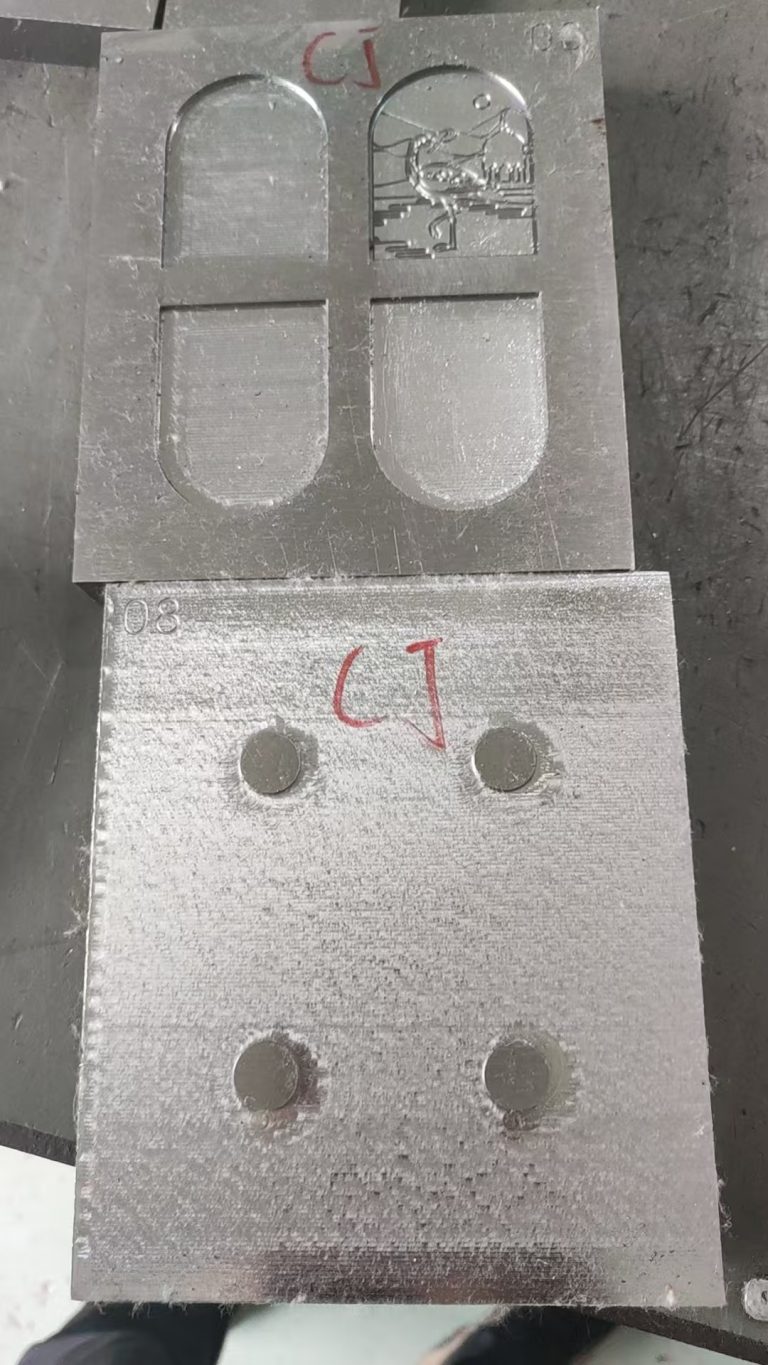
After preparing the production drawing, we made the metal mold.
All three samples in this project came from the same mold. We did not change the outer shape or the finished product thickness.
The common production steps were:
Artwork preparation → Mold making → Zinc alloy die casting
After casting, we used different finishing methods to complete each version.
Why Did We Use a 0.5 mm Recess?
For this comparison, we used a mold recess depth of 0.5 mm.
This is the depth designed into the recessed areas of the mold. It is not the finished thickness of the magnet or the thickness of the enamel itself.
When preparing a new mold, our usual starting recommendations may differ by process.
For UV printing without a white base, we may consider a shallower recess of around 0.3 mm. For soft enamel, we commonly use around 0.5 mm. For hard enamel, we may recommend around 0.6 mm.
These are our factory’s design references, not fixed limits for every product.
In this case, we chose one shared 0.5 mm mold so we could make and compare three finishing options.
How Small Can the Metal Lines and Color Areas Be?
For fine raised metal lines, we generally recommend around 0.12 mm in our reviewed artwork, allowing for the space needed by the mold’s draft angle.
For soft enamel, our normal design reference for the minimum fill area is around 0.25 mm.
For hard enamel, we usually allow at least around 0.45 mm for color filling.
These values depend on the shape and depth of the area. A long, narrow line can be more difficult to fill than a small, open section.
UV printing works differently. The colors are printed rather than filled into individual enamel compartments, so it does not have the same minimum enamel-fill width requirement.
However, very fine UV details still depend on printing resolution, positioning and the surface being printed.
This is why we check each design before confirming the production method.
3,UV Printing: The Fastest and Lowest-Cost Option
UV printing was the most economical option in this project.
After zinc alloy die casting, our main production steps were:
Polishing → Electroplating → UV printing → Magnet assembly → Packaging
UV printing is useful when the artwork has small details, several colors or printed graphics that would be difficult to separate into individual enamel areas.
There is no need to fill each printed color by hand.
For this particular magnet, UV printing reduced the finishing work and gave us the shortest production schedule.
Our reference unit price was approximately US$1.00, with a production time of around 10 days.
We recommend UV printing when customers want to control their budget, need a shorter lead time or have artwork that suits full-color printing.
It does not have the same raised-metal-and-enamel feel as a traditional enamel finish, but it is a practical choice for many promotional projects
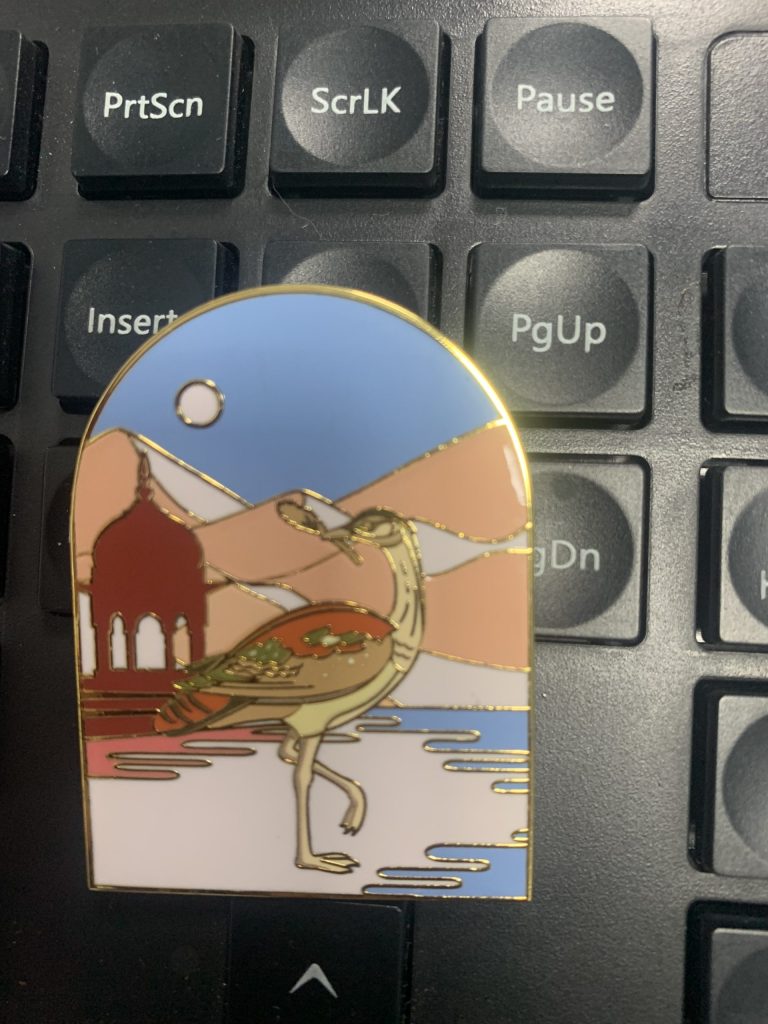
4. Soft Enamel: A Good Balance of Cost and Appearance
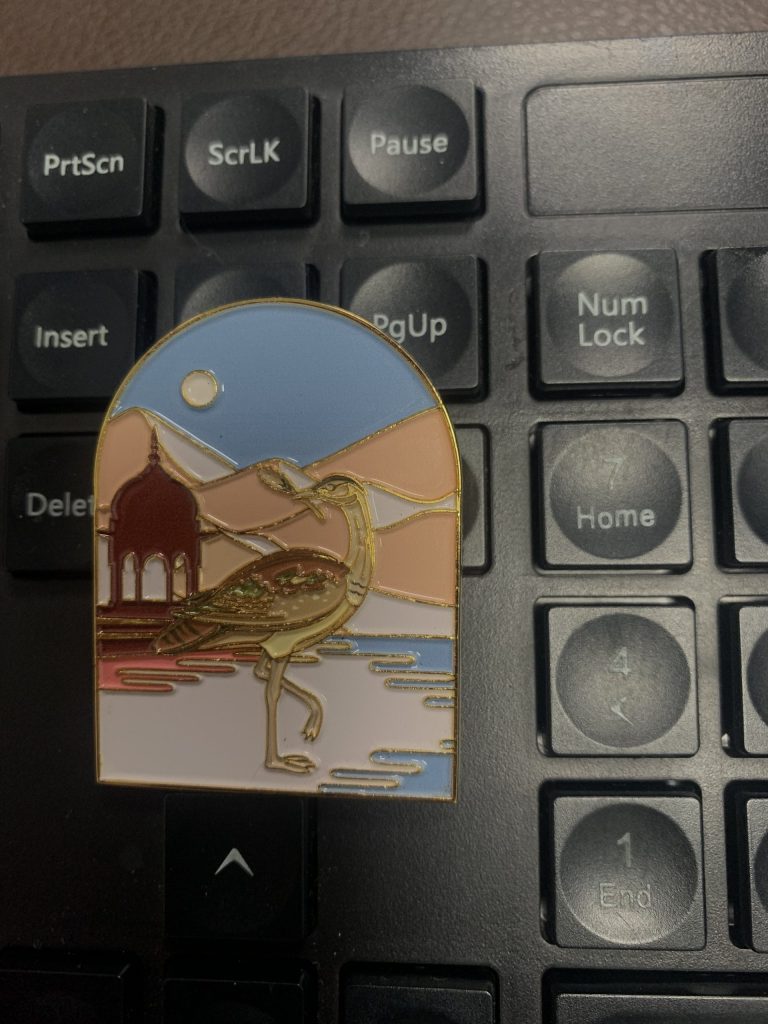
Soft enamel was the second option.
With soft enamel, colors are placed into recessed areas separated by raised metal lines.
The metal borders remain noticeable, giving the product a textured surface.
After casting, the main steps for our soft enamel samples included:
Polishing → Color matching → Enamel filling → Magnet assembly → Packaging
Color filling takes more time than UV printing because the different color areas need to be handled separately.
The design also needs enough room for the enamel to be filled properly.
For this magnet, the reference unit price was approximately US$1.50, and production took around 12–13 days.
We often recommend soft enamel when a customer wants a traditional metal-and-color appearance but also needs to keep the cost under control.
It is a good option for custom souvenirs, badges, keychains and other metal gifts.
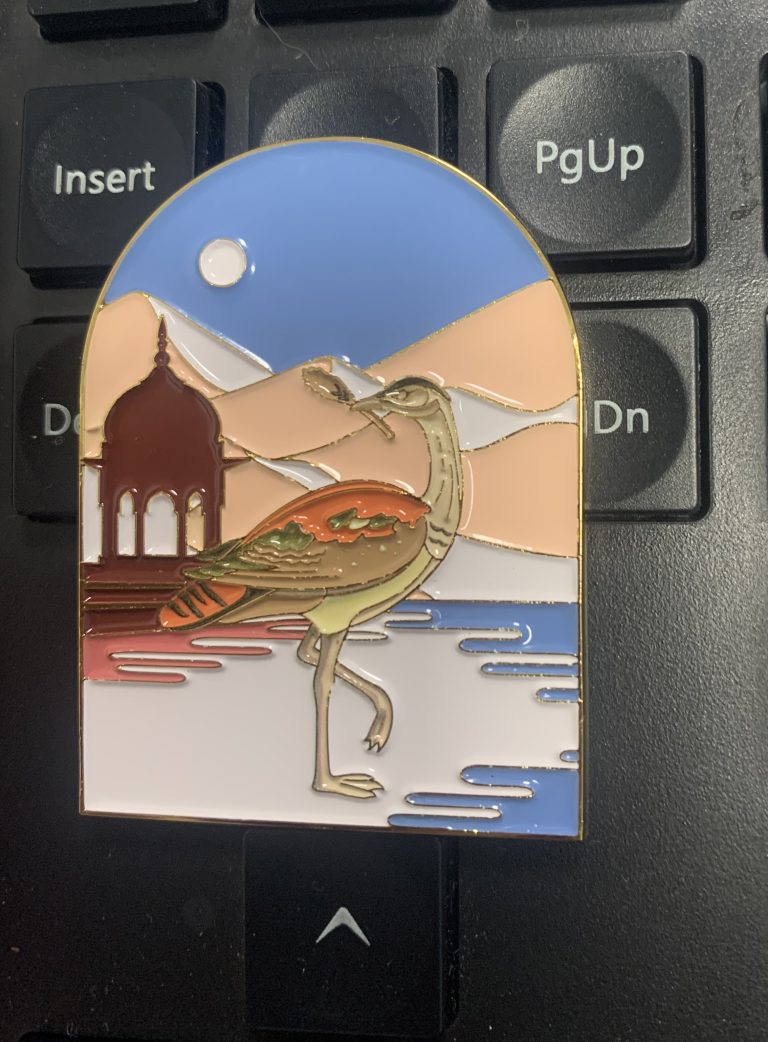
5. Hard Enamel: A Smoother, More Refined Surface
Hard enamel was the most expensive of the three options.
The main difference is the finishing work.
With hard enamel, the color-filled surface is ground and polished to create a smoother finish, closer to the level of the surrounding metal lines.
For this project, our finishing steps after casting were:
Color matching → Enamel filling → Stone grinding → Polishing → Electroplating → Magnet assembly → Packaging
The grinding and polishing stages take additional time.
They also require careful handling, especially on a design with fine metal lines and several small color areas.
In our comparison, hard enamel gave us the most refined surface finish.
The reference unit price was approximately US$2.00, and production took around 15–18 days.
We recommend hard enamel when the customer places more importance on the surface appearance and finish than on achieving the lowest possible price.
That does not mean hard enamel is the best choice for every design. Sometimes the textured look of soft enamel is exactly what the customer wants.
UV Printing vs Soft Enamel vs Hard Enamel: Price and Lead Time
The table below shows our actual comparison for this metal fridge magnet.
The three versions had the same size, thickness and mold. The prices changed because the finishing work was different.
| Item | UV Printing | Soft Enamel | Hard Enamel |
|---|---|---|---|
| Metal base | Zinc alloy | Zinc alloy | Zinc alloy |
| Mold | Same mold | Same mold | Same mold |
| Product thickness | 2.5 mm | 2.5 mm | 2.5 mm |
| Mold recess | 0.5 mm | 0.5 mm | 0.5 mm |
| Reference unit price | US$1.00 | US$1.50 | US$2.00 |
| Production time | 10 days | 12–13 days | 15–18 days |
| Minimum order | 100 pcs | 100 pcs | 100 pcs |
| Main advantage | Lower cost, faster production | Textured enamel finish | Smoother, more refined finish |
These are reference prices from this specific comparison, not fixed prices for every custom magnet.
Final pricing depends on the product size, artwork, quantity, plating and other production requirements.
Why Does Hard Enamel Cost More?
The metal base is not the main reason for the price difference in this case.
We used the same mold and zinc alloy parts for all three versions.
The extra cost came mainly from the finishing process.
UV printing required less individual color-filling work.
Soft enamel required separate color preparation and filling.
Hard enamel required additional grinding and polishing after coloring.
That extra work also explains why the hard enamel version took longer to produce.
7. What Did the Finished Samples Look Like?
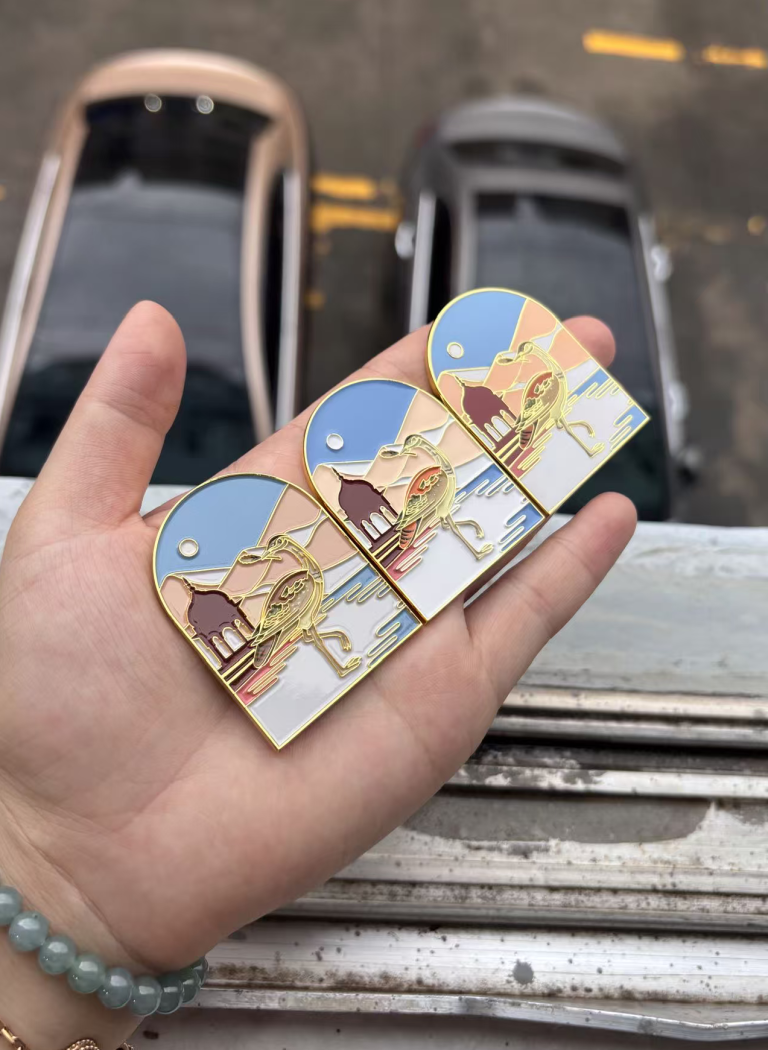
We made three physical samples and photographed them together.
All three kept the main design: the bird, the mountains, the building and the colored landscape.
The gold-colored metal borders also helped separate the different parts of the image.
At first glance, the samples looked similar because the shape and artwork were the same.
The differences became more important when looking closely at the color surface and the metal details.
UV printing was the most economical way to reproduce the artwork.
Soft enamel kept the recessed color areas and the feel of the raised metal lines.
Hard enamel had the smoother, more polished surface we wanted to show in this comparison.
Photos are helpful, but they do not always show how a surface feels in your hand.
For customers deciding between these finishes, we recommend comparing physical samples when possible.
8. Which Finish Would We Recommend?
There is no single answer for every order.
If the main concern is cost or delivery time, we would normally discuss UV printing first.
If the customer wants a traditional enamel appearance at a reasonable cost, soft enamel is worth considering.
If the priority is a smooth, refined surface, we would recommend looking at hard enamel.
We also check the artwork before making a recommendation.
A design with many gradients or tiny printed details may be better suited to UV printing. A design with clearly separated color areas may work well with soft or hard enamel.
Sometimes we suggest small changes to the artwork so that the chosen process can be produced more reliably.
The purpose of these changes is to make sure the finished metal product matches the approved design as closely as the process allows.
Frequently Asked Questions
Yes, an AI-generated image can be used as a design reference.
We still need to prepare production artwork, confirm the dimensions and check the metal lines and color areas before mold making.
If the AI image changes important details from the customer’s original design, we need to confirm which version to follow.
Sometimes, yes.
We used one mold for all three versions in this project.
However, a new design may need different recess depths or adjustments depending on the finishing method.
We review this before confirming whether a shared mold is practical.
In our comparison, soft enamel cost approximately US$1.50 per piece, compared with US$2.00 for hard enamel.
However, the final price depends on the design, finishing steps and quantity.
Not necessarily.
Hard enamel gave this project a more refined surface, but UV printing was faster and more economical.
For artwork with complex printed details, UV printing may also be the more suitable production method.
Our minimum order quantity for these three options is 100 pieces per design.
We review the artwork and specifications before confirming the final quotation.
We made this comparison because customers often ask why the price changes when the design looks the same.
Using one mold allowed us to compare the finishing methods without changing the metal base.
For this project, UV printing was the fastest and lowest-cost option. Soft enamel provided a good balance between price and appearance. Hard enamel gave us the smoothest and most refined finish of the three.
At Shenzhen Yuehui Gifts Co., Ltd., we manufacture custom metal fridge magnets and other promotional metal products using zinc alloy die casting, enamel coloring, UV printing and different metal finishes.
If you have a drawing, a reference photo or an AI-generated design, you can send it to us with the size and quantity.
We can check the artwork and help you choose a suitable manufacturing method.
You can also see more examples on our Custom Fridge Magnets page.
Watch Our Real Metal Fridge Magnet Samples
This video shows our finished metal fridge magnet samples, filmed with a DJI camera.
We used the same zinc alloy mold to compare UV printing, soft enamel and hard enamel. While the shape and thickness remained the same, the finishing processes affected the surface appearance, production time and cost.
The video gives you a closer look at the actual products rather than a digital rendering.