
Buyers often send us their artwork before they pick a metal. They want the piece to look and feel right, and they have a price to hit. At Yuehui Gifts, we have been making custom metal gifts for more than a decade. Our Shenzhen factory is ISO 9001 certified.
Start with die cast zinc alloy for deep 3D shapes, cutouts or a lighter piece. Consider die struck brass for a heavier feel, smooth flat areas and crisp raised details.
For this comparison, a customer mailed us a sample. We used it to draw the artwork for an 80 mm commemorative coin with a specified thickness of 5 mm. We used the same 3D model data to make separate tooling for both metals.
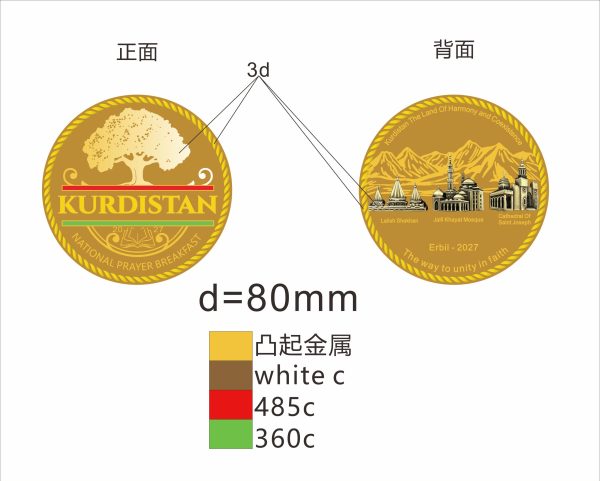
The production artwork marks the raised metal on both faces of the coin.
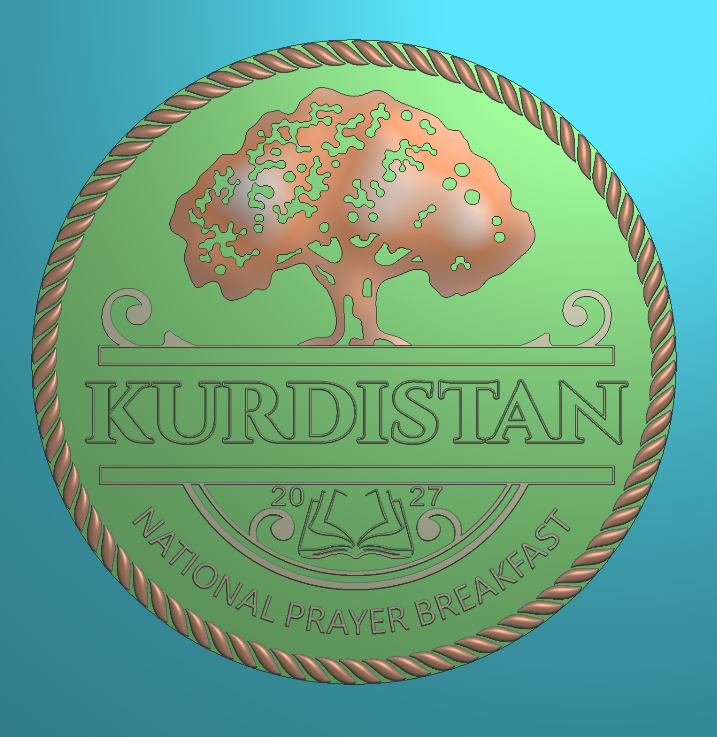
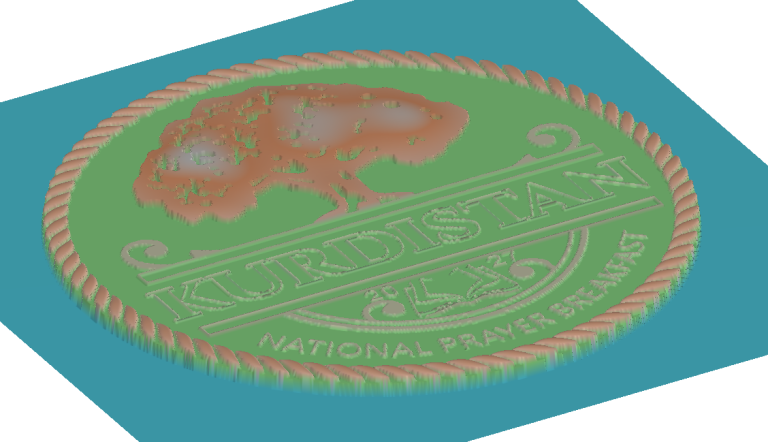
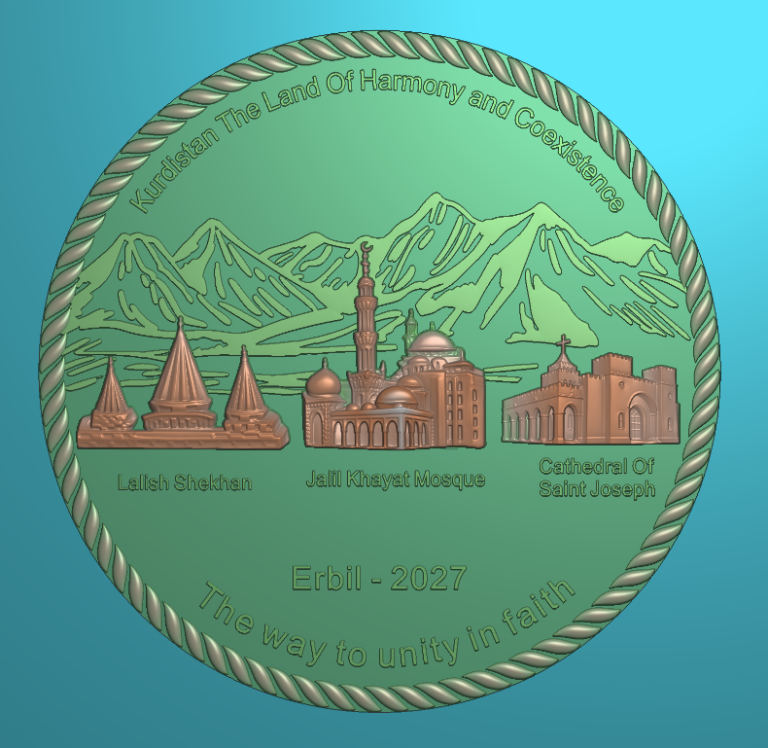
Front, angled and back views of the 3D model used to make both sets of tooling.
How zinc alloy and brass are formed
Die cast zinc alloy
Zinc casting alloys have a low melting point and flow well. The machine injects molten alloy into a steel die under pressure. This works well for rounded relief and designs with several levels. We can often form openings directly in the die if the shape and spacing of the cutouts allow it.
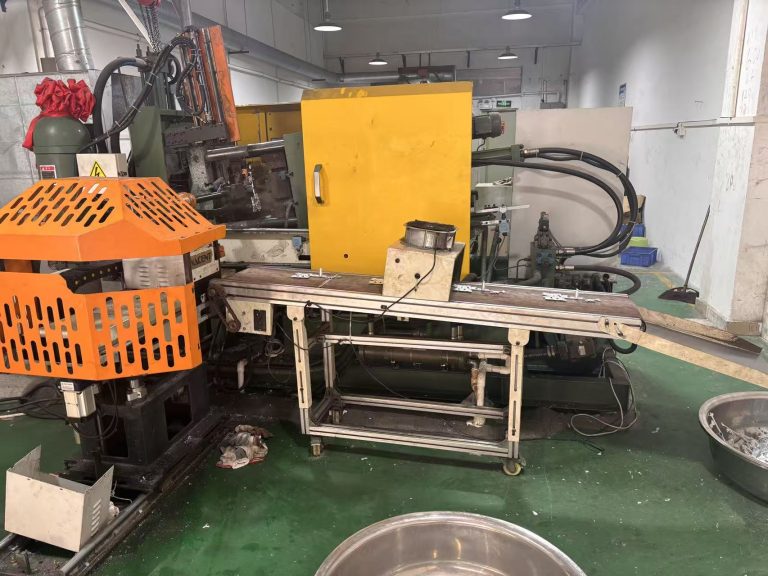
The zinc alloy die inserts and the die casting machine used to form the coin.
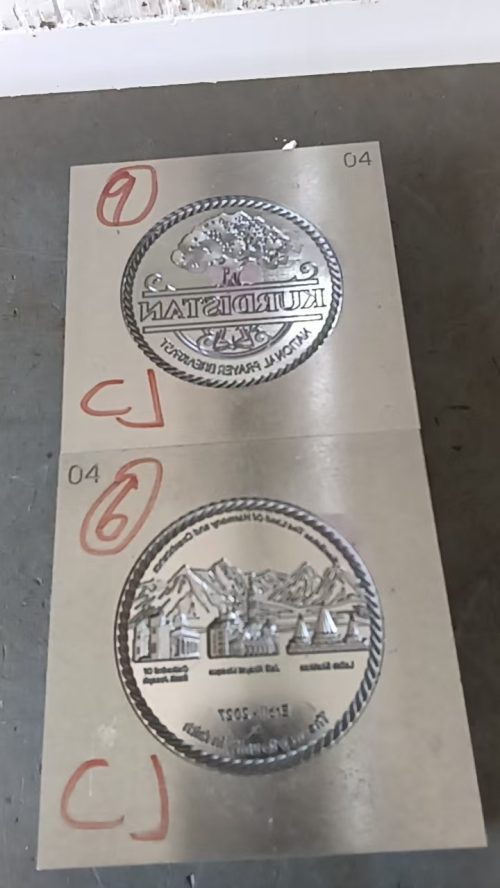
Die struck brass
Brass is an alloy of copper and zinc. A press forces a solid brass blank between engraved steel dies. The pressure forms the lettering, border and relief. Brass grades used for die striking form well under pressure and give you sharp raised edges and smooth flat areas. The depth we can achieve depends on the blank, the dies and the press setup.
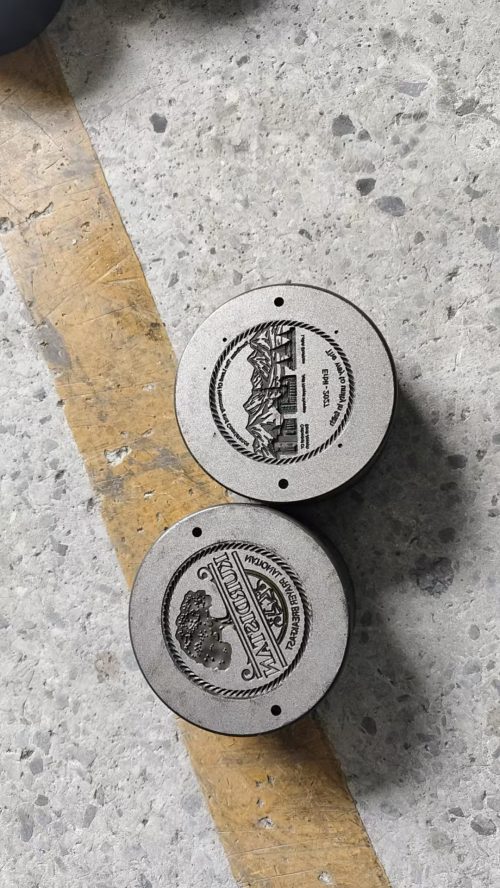
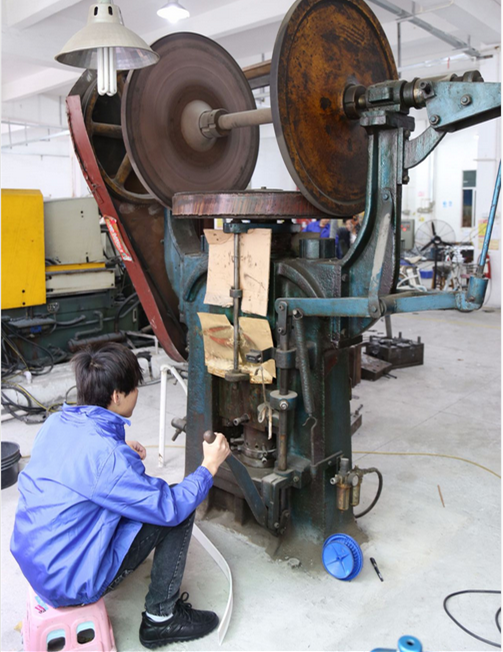
The pair of round striking dies and the press used to form the brass coin
Raw metal cost and the finished quote
Take zinc alloy at US$2.50 per kg as a budgeting example. Brass at three times that rate comes to US$7.50 per kg. A quote for the finished piece also depends on how much metal goes into the job, tooling, polishing, plating, color fill and order quantity.
Four differences you can see and feel
Relief height
Look at the buildings on the back of the coin. On our zinc alloy sample, the highest points rise farther above the background. The brass version still has clear 3D detail, with a shallower rise on this design. If a feature needs to stand out, specify its relief height as well as the overall thickness of the piece.
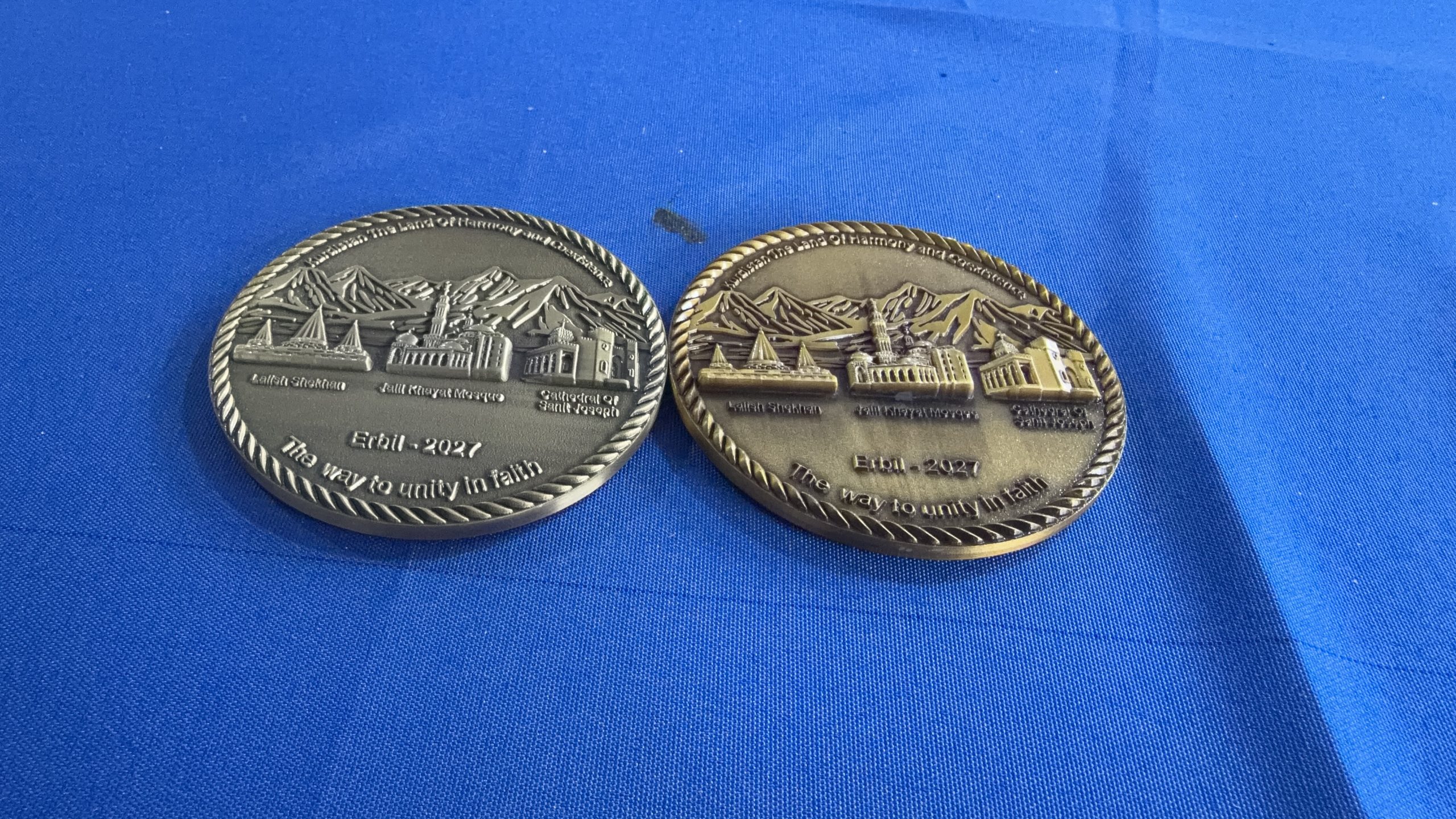
The backs of the finished samples. The angle makes the height of the roofs and walls easier to see.
Lettering and metal lines
The small letters came out finer on the die cast coin and a little bolder on the die struck coin. If your design has fine text, check the stroke width and the space inside the letters on the finished sample. Both affect how easily the text can be read at actual size.
Plating color and sheen
We specified the same plating color for both samples. The zinc alloy coin looked more yellow, with a deeper gold tone. The brass coin looked more subdued. The polish, surface texture and plating layers can all affect how a finish looks. If a close color match matters, compare physical samples under the same light. See examples in our guide to medal plating.
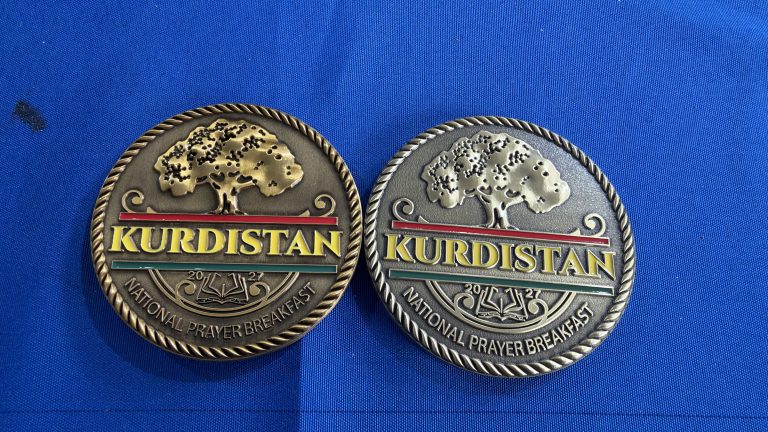
Zinc alloy on the left and brass on the right. Compare the plated tree and rope edge, then the small lettering.
Plating color and sheen
We specified the same plating color for both samples. The zinc alloy coin looked more yellow, with a deeper gold tone. The brass coin looked more subdued. The polish, surface texture and plating layers can all affect how a finish looks. If a close color match matters, compare physical samples under the same light. See examples in our guide to medal plating.
Weight and feel in hand
The zinc alloy coin weighed about 145 g. The brass coin weighed about 192 g. Brass is denser than the zinc alloys commonly used for casting, so it usually weighs more at the same size and shape. The difference on this coin was 47 g. At 1,000 pieces, that would add about 47 kg to the brass order before packaging.
.
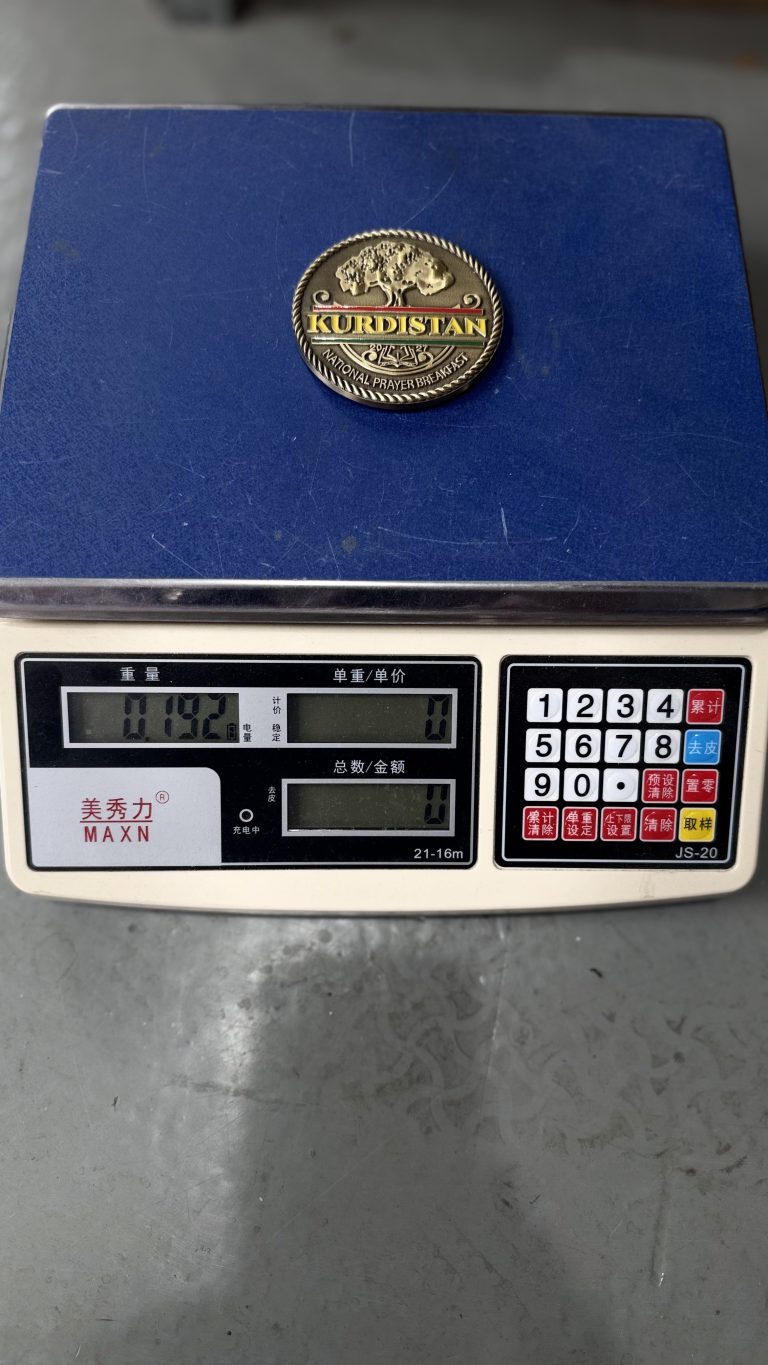
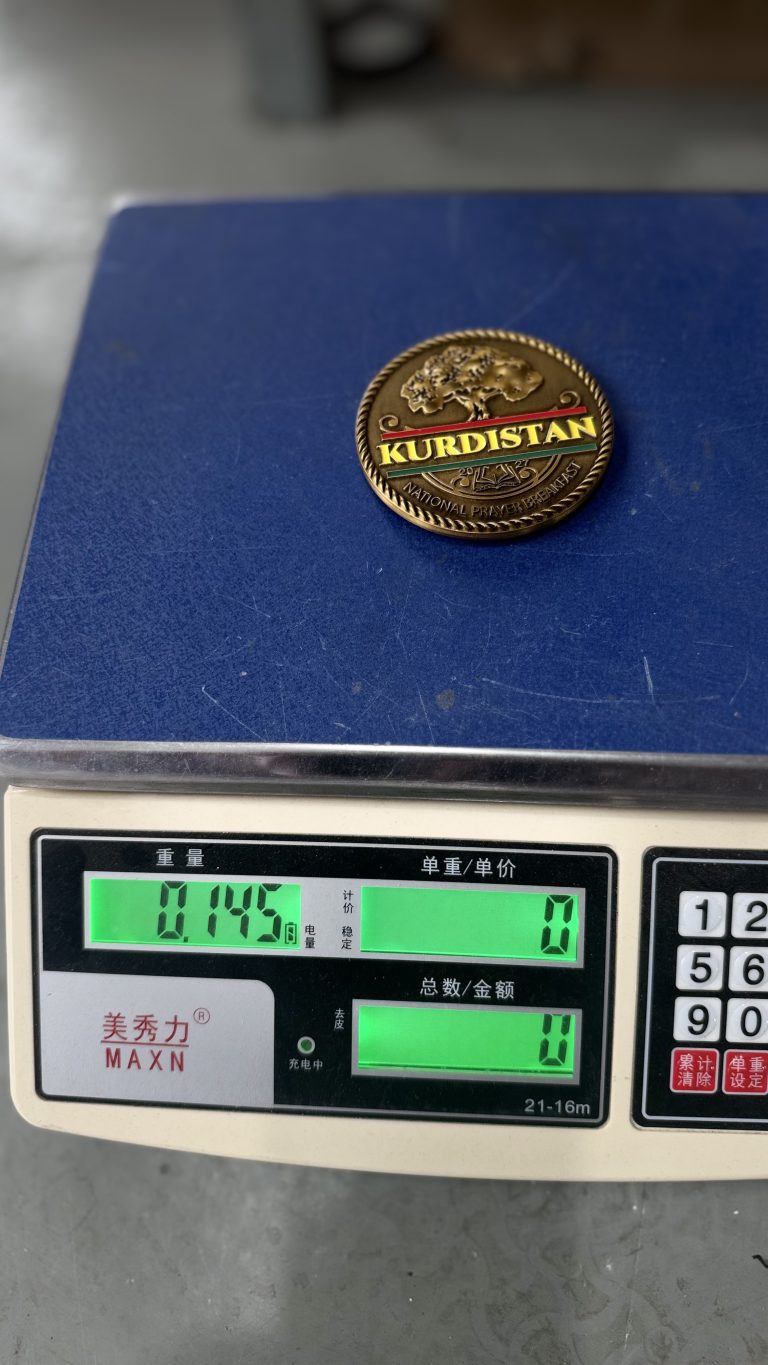
Factory scale readings for the finished brass coin (left) and zinc alloy coin (right).
How the finish holds up in use
We often favor die struck brass for keepsakes that will be handled regularly. It starts as a solid blank, so it avoids the small pores that can form when air gets trapped in a casting or when the metal shrinks as it cools. Where a pore reaches the surface, even plating coverage can be harder to achieve. Exposed zinc alloy can oxidize when air and moisture reach it.
A well-prepared and plated zinc alloy piece can hold up well in normal use. Brass can tarnish where the finish wears through. On both metals, surface preparation, plating coverage and exposure to wear or moisture affect how long the finish holds up. For the casting side, see the International Zinc Association’s guidance on polishing and plating.