
Custom baseball pins for hat ,Use the most popular design materials to make your lapel pins unique.
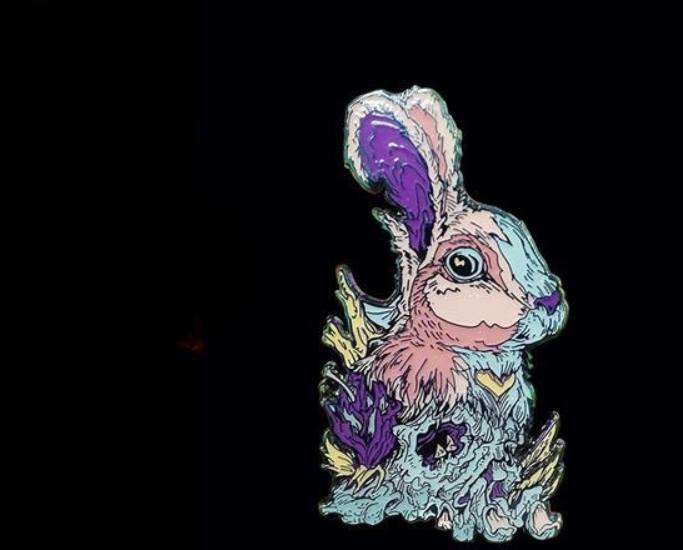
Why are pins for hat so popular with young people
Lapel pins are currently the most popular toy for young people on the market. Metal lapel pins were born as early as the 19th century. Why is it still so popular?
At present, the lapel pin can be said to be an ultra-light carrier. Designers create IP images that young people like, and then sell them in the form of blind boxes and small gifts. Collecting lapel pins is like collecting cards as a kid. Coupled with some pop culture images, certain rare pins are even more maddening to young people.
Basic requirements for designing pins for hat
Many young people like hat pins. This has a lot to do with how they dress every day. Love baseball, hip-hop, scooter and other sports and entertainment. They dress more casual, punk, and wear baseball caps to make them more personal.
In the design, we can play a bold imagination, cartoon characters, machinery, animals, balls can become the design points. Weird, maverick designs are often more noticeable
Price of custom hat pins
lapel pins are generally made of zinc alloy and processed by hard enamel /soft enamel and gold plating /die custing. Compared with fashionable products such as blind boxes, the production process is simple, mature and low cost. Therefore, the price of the finished product is generally lower than that of the blind box. The famous tide play brand not only highlights the uniqueness of the badge blind box through the secondary design and creation of the IP image from the pattern, but also innovates its form to make it more representative of the trend style of young people, so as to attract new fans “into the pit” and become an effective way for the tide play brand to attract new users.
At present, the common lapel pin price retail price of $5- $45. However, the price will be much lower when it is customized in bulk. The usual formula is:Mold cost +unit price *quantity +shipping cost
How to custom pins for hat
Custom Badge Production Process & Professional Guidelines
1. Demand Communication and Confirmation
Collaborate with the manufacturer to clarify core customization parameters:
Application Scenario & Budget**: Specify the badge’s purpose (e.g., fan support, brand promotion, event commemoration) and budget range.
Process Type: Confirm the preferred production process (e.g., cloisonné enamel, imitation enamel, screen printing, or other techniques).
Dimensional & Material Specifications: Define the badge’s shape (circular, irregular, etc.), size (e.g., diameter in millimeters), and base material (e.g., brass, zinc alloy).
Volume & Lead Time: Confirm the order quantity and required delivery date.
Outcome: Customization requirements finalized.
2. Design Draft & Vectorization
Translate conceptual ideas into actionable design files:
Design Proposal Submission: Provide visual references (e.g., reference images, hand-drawn sketches) or detailed textual descriptions to convey design intent.
Vector Graphic Development: The manufacturer’s design team will create standardized vector files (in AI/CDR format) based on the draft. Vectorization is a critical prerequisite—mold fabrication cannot proceed without vector graphics.
Outcome: Vector design confirmed.
3. Mold Fabrication
Produce the core tooling for mass production:
Mold Engraving: Using precision CNC engraving machines, the manufacturer carves the badge’s pattern onto mold steel, which serves as the foundation for subsequent stamping.
Cost Notes: A one-time mold fee applies (may be offset or refunded for large-volume orders). Reorders of the same design will not incur additional mold costs.
Uniqueness: Each distinct design requires a unique mold.
Outcome: Mold engraving completed.
4. Sample Validation
Verify physical feasibility before mass production:
Sample Production: The manufacturer will produce 3–5 physical samples for review.
Inspection Focus: Evaluate whether the sample aligns with expectations in terms of material, color accuracy, process execution, and detail fidelity.
Criticality: Sample validation is strongly recommended—it is the final opportunity to identify and rectify defects. Mass production commences only after sample approval.
Cost Notes: A sample fee is typically charged, which may be offset or refunded upon bulk order confirmation.
Outcome: Sample confirmed.
5. Mass Production
Execute large-scale manufacturing via standardized processes:
1.Stamping: Use the mold to press the badge’s outline and pattern onto metal sheets.
2. Electroplating: Apply surface treatments (e.g., gold plating, silver plating, antique copper plating) to the metal blanks.
3. Coloring:
– Cloisonné/imitation enamel: Fill recessed areas with enamel glaze or resin.
– Baking paint: Fill grooves with colored paint and cure via high-temperature baking.
4. Polishing/Grinding: Smooth the surface for a refined finish.
5. Protective Coating: Apply an anti-oxidation electroplating layer to prevent discoloration.
6. Attachment Welding: Affix back accessories (e.g., pins, magnets).
→ Outcome: Mass production completed.
6. Quality Control & Shipment
Ensure compliance and deliver the final product:
Quality Inspection: Conduct full or random sampling inspections to verify dimensional accuracy, color consistency, and structural integrity.
Packaging & Shipping: Package products per requirements (e.g., individual OPP bags, bubble wrap, card backing) and arrange shipment.
Outcome: Shipment dispatched post-inspection.
Process Overview
Idea Initiation → Demand Alignment → Vector Design Confirmation → Mold Fabrication → Sample Validation → Mass Production → QC & Shipment
Professional Recommendations
Budget Allocation: Include potential costs for design, mold fabrication, and sampling in the total budget.
Lead Time Planning: The entire process typically takes 10–20 working days (varies by design complexity). Reserve sufficient time for event-related orders.
Manufacturer Selection: Partner with a reputable supplier that provides end-to-end communication and professional technical guidance.
view about hat pins